Creative report: one page to decide the next video as a team
Organize goal, evidence, limits and next actions in a video report that helps you decide. A practical template without an excess of indicators.
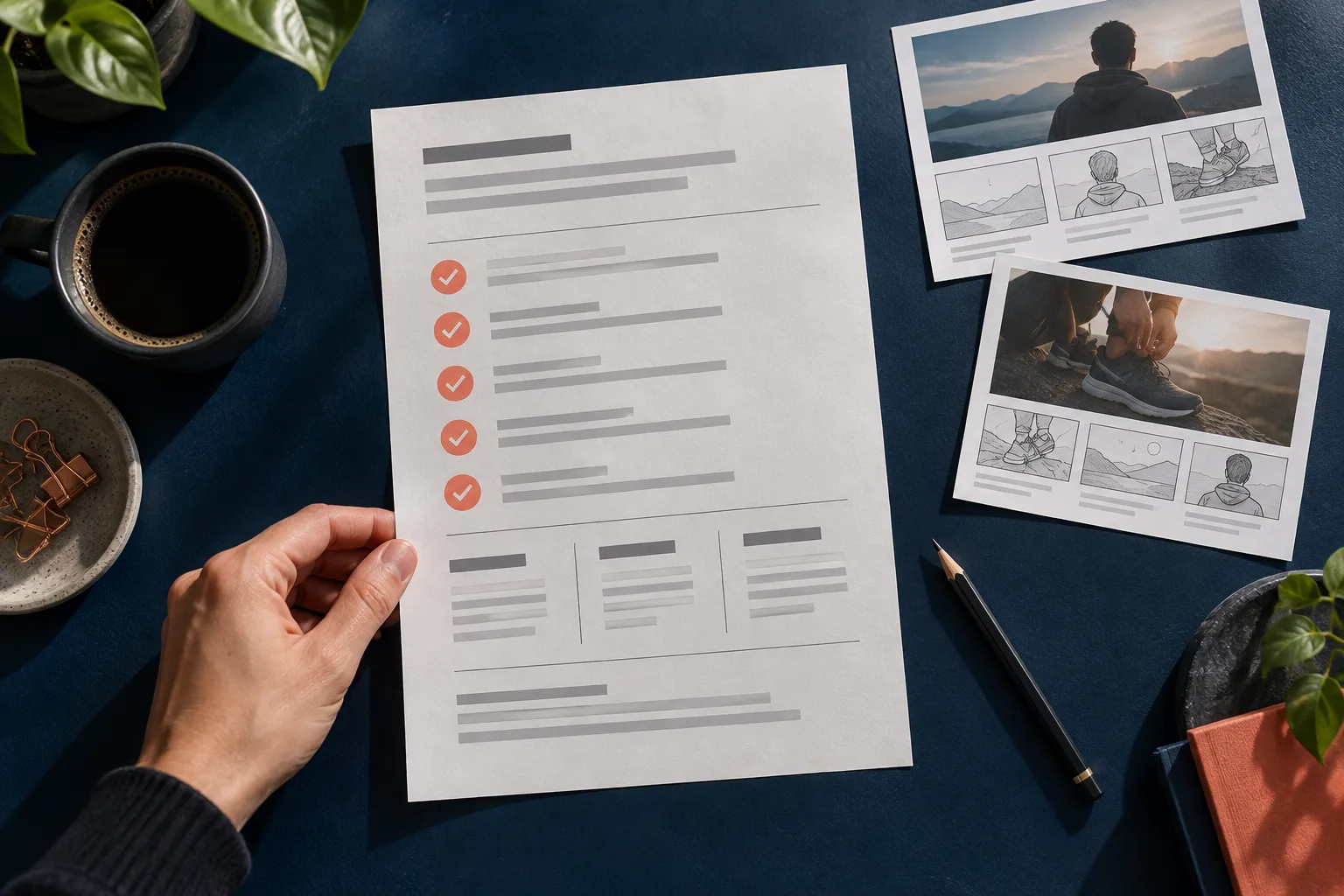
A presentation with twenty charts can end with no decision. Everyone agrees a video "did well," but nobody knows which element to keep, which hypothesis to test or who will prepare the next version. The report did its job of showing work, not of guiding work.
A useful creative report connects goal, observation and action. It can fit on one page when the team picks the information that really changes the next round. The template below was designed for small operations, but the logic also helps larger teams.
Open with the decision that needs to be made
Instead of starting with the count of published videos, write the meeting's question. "Which opening will we develop next week?" is different from "Which questions need an explanatory piece?" The first compares approaches; the second organizes an agenda.
Right below, state the period analyzed and the context. Was there a promotion, an unavailable product or a change in the ads' destination? These conditions don't need to take up a whole page, but they should appear before anyone attributes everything to the script.
Also identify who takes part in the decision. One person can choose the editorial approach while another confirms product information. Separating these responsibilities reduces late reviews.
Use a short sheet for each video
Each piece needs an identification that stays the same in the file, in distribution and in the report. A name like "organizer-measurements-opening-question-v2" is more useful than "final-this-time-for-real." Add a link to watch the exact version.
The sheet can have five fields: the video's role, hypothesis, expected audience or context, main indicator and a qualitative note. Include the destination page when there's an action outside the video.
Don't copy every available metric. Choose the ones needed to answer the initial question. If the piece was created to explain assembly, analyzing only orders can leave out its contribution to first use.
Separate fact, interpretation and proposal
This separation is the heart of the report. "Version B got more clicks in this period" is an observation. "The opening question may have sparked curiosity" is an interpretation. "Let's test the same question with a more direct explanation" is a proposal.
When the three appear mixed together, a hypothesis can turn into a certainty nobody verified. Use simple sentences to make the level of confidence visible. If the volume is small or the distribution was uneven, write that next to the conclusion.
You don't need to weaken every decision with generic caveats. Just point out the limitation that could really change the reading. The team can act even without complete certainty, as long as it knows what it's assuming.
Example reading for a fictional brand
A bottle store produced two videos: one presents the colors and the other explains the capacity. The color piece got more attention; the capacity piece generated more specific questions about the product. They don't need to compete for a single "best video" trophy.
The report can conclude the two serve different roles. The next round keeps a visual presentation piece and develops a size explanation in context. To compare openings, you'll need a test in which the main role stays similar.
This reasoning avoids discarding useful content because it didn't lead a metric designed for another task. The UGC scripts guide helps you align each piece's structure to its role.
Turn conclusions into a small queue
At the end of the page, write a few actions with an owner and a completion criterion. "Improve the videos" doesn't go in this queue. "Prepare an opening that mentions the capacity and keep the rest of the script" does, because someone can carry it out and review it.
Separate production, verification and measurement actions. If the team needs to confirm information before recording, that dependency must appear. Otherwise the edit starts on an answer that is still uncertain.
Keep interesting ideas that don't fit the round in a separate list. The report loses force when every observation becomes an urgent task and nobody can prioritize.
Close the loop at the next meeting
Revisit the earlier decisions before you open new charts. Was the agreed video produced? Was the hypothesis tested? Did any information come up that changed the plan? This routine connects the reports to the real work and keeps each meeting from starting over from zero.
Keep a short history of conclusions, including the inconclusive ones. It becomes an editorial memory for new people on the team and reduces tests repeated by accident.
In AvataReel, use the approved actions to prepare the next scripts and choose the right Influencer. Create your video with a goal you can identify in the report. That way the next production starts from a decision everyone can explain.
Upload a photo, record your voice and type the script. Your first avatar is free.
Create my free avatar →