AvataReel vs. Generative AI Video (Veo, Sora, Kling): Which One to Use for Selling?
A practical comparison between AI influencer video and generative video models: speech and lip sync, voice, face consistency, cost per video and when to combine the two. With an interactive quiz and a credit calculator.
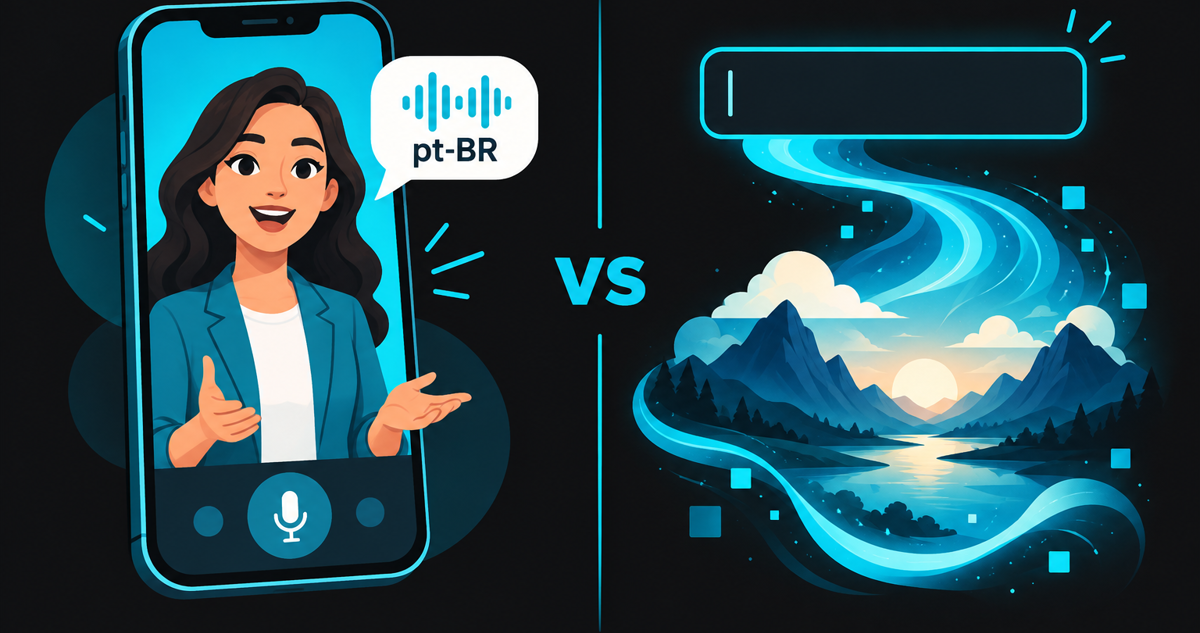
Every month a new AI video model shows up: Veo, Sora, Kling, Runway. The demo videos are impressive. Then you try to use one for your store's ad, write "a woman talking about my moisturizer" and the result is a mouth that does not follow the audio, a strange accent and a different face on every attempt.
That is not your fault. Generative video and AI influencer video solve different problems. This post explains the difference, shows where each one wins, and ends with a quiz that tells you which to use in your case.
What each one does, in one sentence
- Generative video model (Veo, Sora, Kling, Runway): takes a text prompt or an image and generates a scene. Any scene. Camera, light, movement, setting.
- AI influencer video (AvataReel): takes a script and an avatar, generates the speech, syncs the lips and delivers a vertical video ready for Reels, TikTok and ads.
One generates scenes. The other generates someone saying exactly what you wrote.
In practice, the difference shows up on the first long line of speech: the generative model delivers a beautiful scene with a mouth that does not follow the audio; the avatar tool delivers the exact text, with the right mouth, but does not invent the scene.
Point-by-point comparison
| AvataReel | Veo / Sora / Kling / Runway | |
|---|---|---|
| Follows a script word for word | Yes, it is the main input | No; the prompt describes the scene, not the spoken text |
| Lip sync | Yes, throughout the speech | Partial; fails on long lines and outside English |
| Voice | Native: catalog voices or your own, in Portuguese, English and Spanish | Varies by model; a translated-sounding accent is common |
| Same face in every video | Yes (catalog or your avatar) | Not guaranteed between generations |
| Cinematic scene or b-roll with no speech | Limited (optional scene with product) | Strong point |
| Output format | 9:16 ready for Reels and TikTok | Varies; manual adjustment afterward |
| Billing | Credits, sold in USD by card; they do not expire | Per second generated; every attempt counts |
| Time until the video is ready | Minutes, no editing | Minutes per attempt; several attempts per scene |
Where the generative model wins
If the video has no speech, the generative model is unbeatable. A product spinning on a countertop, a drone over the beach, liquid falling in slow motion, a setting that does not exist. It is the b-roll you would never shoot with a phone.
It also wins when the face can vary. A conceptual video, a teaser, a short intro. If nobody needs to recognize the person in the next video, inconsistency between generations does not get in the way.
And it wins on creative freedom: you describe and the model tries. Sometimes it nails it on the first try. Sometimes on the tenth. The cost is paying for each one.
Where AI influencer video wins
When the video needs to say something specific: the price, the benefit, this week's offer, the link in the bio. You write, the avatar speaks. No prompt interpretation.
When it needs to be in your language and sound like a local. AvataReel uses catalog voices in Portuguese, English and Spanish, or your own cloned voice. No "translation accent".
When the same face needs to appear in today's video and in the one three months from now. A catalog avatar, or your own, created from a photo.
And when you want cost predictability. The price of a video depends only on the script length and the quality you choose, in credits, and the rule is public: see the calculator below.
Where to combine the two
The best UGC ad usually has both: someone talking and scenes of the product. The recipe we see work most:
- Speech with an avatar. Write a 10 to 20 second script: hook, benefit, call to action. Generate it on AvataReel.
- Generative b-roll. Ask Veo, Kling or Runway for 2 or 3 short scenes of the product, with no people and no speech.
- Assemble in CapCut. The avatar talking as the base, b-roll covering 3 to 5 seconds in the middle.
If you do not want to assemble anything, AvataReel has a shortcut: the scene is optional. Describe the setting, upload the product photo, and the avatar appears in context in the same video.
Which one should you use in your case?
Answer four questions. You get the result right away, no sign-up.
- 1. What does the video need to show?
- 2. What language is the video in?
- 3. Does the same face need to appear in many videos?
- 4. How many videos per month?
Paste the text the avatar will speak. The math uses the same rule as the product's Premium option: 1 credit per video plus 0.8 per second.
Common mistakes when trying to sell with generative video
- Asking for speech in the prompt. "A woman saying the product is great" gives you a woman moving her mouth. The exact text does not come out.
- Redoing it until the face is right. Every generation is billed. Ten attempts to keep the same face cost ten videos.
- Ignoring the format. Many models deliver 16:9 by default. Reels and TikTok are 9:16; cropping afterward cuts the scene.
- Forgetting the voice. A beautiful video with robotic dubbing on top loses the UGC effect. The voice needs to be born with the video.
Summary
| You need | Use |
|---|---|
| Someone speaking a script | AvataReel |
| A scene or product in motion, no speech | Veo, Sora, Kling, Runway |
| Both in the same video | Avatar for the speech + generative b-roll, or AvataReel's optional scene |
| The same face in every video | AvataReel |
| Predictable cost | AvataReel |
A vertical video with a native voice and synced lips, in minutes. Credits sold in USD by card.
Create my video →Frequently asked questions
Are generative AI video and AI influencer video the same thing?
No. Generative models (Veo, Sora, Kling, Runway) create any scene from a text or image prompt. An AI influencer video starts from a script: the tool generates the speech, lip-syncs an avatar and delivers a finished vertical video. One generates scenes; the other generates someone saying what you wrote.
Can Sora or Veo generate a person speaking my script in my language?
Some models generate audio together with the video, but they do not follow a script word for word, and lip sync outside English still fails on long lines. For an exact text, with a matching voice and a synced mouth, an avatar tool like AvataReel is the option that works today.
Which is cheaper: generating with Veo/Kling or with AvataReel?
It depends on what you need. Generative models charge per second generated, and you pay for every attempt. On AvataReel the cost is in credits, per second of video. On Premium, a 15-second video costs 11 credits; on Economy, 6. The starter pack costs $9, has 120 credits and yields ten Premium videos of that length.
Can I use both together?
Yes, and it usually gives the best result. Use the avatar for the spoken part (offer, review, explanation) and a generative model for product b-roll. On AvataReel, the scene is also optional: describe the setting and upload the product photo so the avatar appears in context.
Does the same face appear in every video?
On AvataReel, yes: you pick an avatar from the catalog or create your own from a photo, and it repeats across all videos. With generative models, keeping the same face between generations still takes tricks (reference image, seeds) and is not guaranteed.
Upload a photo, record your voice and type the script. Your first avatar is free.
Create my free avatar →