AI UGC for fashion: how to create influencer videos for clothing and accessory shops
How to use AI-generated UGC videos to sell fashion on Instagram Reels and TikTok: scripts, visual aesthetics and creatives at scale without hiring creators.
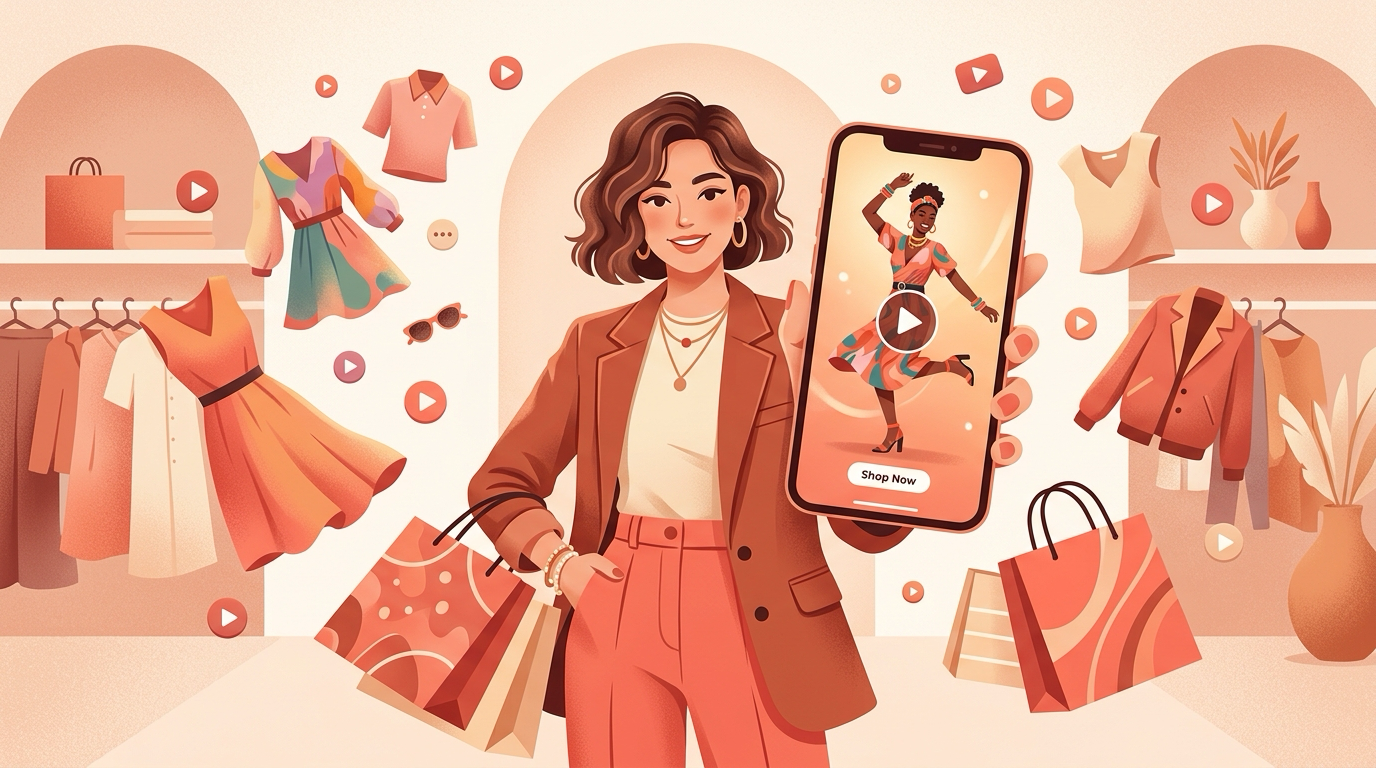
Fashion is one of the sectors where UGC converts best and also one of those that depends most on creative volume and consistency. A collection can have dozens of pieces, each season demands fresh ads, and performance on TikTok and Reels drops fast when a creative gets old.
The problem is that traditional fashion UGC production is expensive and slow: hiring creators, shipping the pieces, waiting for delivery, editing and adapting for each platform. For a small online shop or a growing fashion e-commerce, this model does not scale.
AI-generated UGC videos solve exactly this bottleneck: they let you create influencer creatives at scale, with brand visual consistency, with no camera, no studio and no dependence on third-party creators' calendars.
Why UGC works so well for fashion
The UGC format (user-generated content) imitates one real person's recommendation to another. In fashion, this is particularly effective because the decision to buy clothes and accessories is strongly emotional and based on identification: the buyer wants to see how the piece looks on someone like them, in real situations, before buying.
A product photo on a white background shows the piece. An influencer video shows how it fits into a lifestyle. The difference in perceived value and purchase intent is significant, and the TikTok and Reels algorithms reward creatives that generate genuine engagement.
The fashion creative production bottleneck
For a fashion shop active on Instagram and TikTok, the demand for creatives is continuous:
- Each new piece needs at least one launch creative.
- Seasonal pieces need creatives with a date context (summer, winter, holidays, Black Friday).
- Creatives running more than 2 to 3 weeks tend to lose performance in the algorithm.
- A/B hook tests require multiple versions of the same product.
With traditional UGC (human creators), producing 10 different creatives can take weeks and cost a significant amount in creator fees, product shipping and editing. With AI-generated UGC, the same volume is produced in hours, at a predictable cost per video and without the logistics of shipping pieces.
How to create a fashion UGC video that converts
1. Define the angle before writing the script
Every fashion UGC video that converts starts from a clear angle. The three most effective angles for this segment are:
Occasion of use: where and how to wear the piece. The viewer pictures themselves in that situation. Works well for party wear, office looks, casual chic.
Cost-benefit: how much I would pay for this vs. what it actually costs. Works for price-sensitive audiences and for products where good value for money is the differentiator.
Aesthetic result: how the piece transforms the look, what people commented, how it completed an outfit. Works for accessories, statement pieces and trend items.
A video with one clear angle converts better than one that tries to communicate all three at once.
2. The hook in the first 3 seconds
On TikTok and Reels, the first 3s decide whether the user keeps watching or scrolls on. For fashion, the most effective hooks are those that create instant identification:
- "I finally found a top that fits my real body and my real budget"
- "This look cost almost nothing and everyone thought it was from an expensive store"
- "I wore this in 3 different occasions this week"
- "Stop spending on pieces you won't wear: this is the kind of basic that finishes any look"
The hook does not need to show the product right away. It needs to hold the viewer until the piece is presented.
3. The scene in AvataReel: visual context that sells
In AvataReel, you include the product image along with the scene description. The influencer appears in context with the piece, creating the visual try-on effect that converts in the feed.
For fashion, the most efficient scene is contextual: an environment that reinforces the piece's occasion of use. An office piece appears in a professional setting. A casual weekend piece appears in a relaxed setting. This alignment between product and scene amplifies viewer identification.
4. A direct, unambiguous CTA
A fashion CTA (call to action) needs to be direct and urgent. Examples that work well:
- "Link in bio to shop" (organic Instagram)
- "Swipe up to see the product" (Stories)
- "Tap the button to get yours" (ad with a traffic or conversion objective)
Avoid vague CTAs like "check it out" or "learn more". A viewer who made it to the end of the video already has intent, and the CTA needs to remove friction for the click.
Creative strategy by fashion funnel stage
Top of funnel: cold audience
Goal: build awareness and interest. Videos of 8 to 15s with a strong identification hook. The influencer speaks straight to camera with a "why this caught my eye" hook.
Middle of funnel: audience that already knows the brand
Goal: deepen interest and remove objections. Videos of 20 to 40s with the piece presentation, context of use and answers to common objections (fabric quality, size, fit, delivery time).
Bottom of funnel: remarketing to people who visited the product
Goal: convert. Short videos (8 to 15s) with urgency, a direct CTA and, when possible, social proof reinforcement ("more than X units sold", "4.9 star rating").
Scaling creatives for collections and seasonal dates
The biggest advantage of AI UGC for fashion is the ability to scale creatives without scaling production cost at the same rate.
For a new collection with 20 pieces, the recommended strategy is:
- Create a template script with a hook, product presentation and CTA structure.
- Adapt only the differentiating element of each piece (communication angle, occasion of use, specific hook).
- Use the same influencer across the whole collection to build brand visual consistency.
- Generate hook variations for the 3 to 5 pieces with the most sales potential.
For seasonal dates (Black Friday, Mother's Day, Christmas, Valentine's Day), the same logic applies: create the creatives before the date, schedule publication and put paid media budget behind the winning creatives as soon as you have performance data.
Visual consistency as a brand asset
One of the less-discussed advantages of AI UGC for fashion is visual consistency. When you use the same influencer across your whole line of creatives, you create a recurring face associated with your brand.
This cumulative recognition lowers acquisition cost over time: the more the audience sees the same face associated with your shop, the less effort the algorithm needs to generate engagement. It is the same principle that makes mascots and fixed spokespeople effective in traditional advertising, now applied at scale in the TikTok and Reels feed.
What AvataReel delivers for fashion shops
With AvataReel, fashion shops can:
- Create influencer videos for each piece in the catalog, with the product photo included in the scene.
- Keep the same influencer across the whole line for brand visual consistency.
- Generate multiple hook variations per product for A/B tests.
- Produce creatives as HD 9:16 MP4 (1080×1920 px), native to Instagram Reels, TikTok, YouTube Shorts and Meta Ads.
- Scale creative production ahead of seasonal dates without depending on outside creators.
The result is a creative pipeline that keeps pace with fashion e-commerce: frequent launches, constant refreshing and continuous performance testing.
Start with your best-selling piece
If you do not use AI UGC for fashion yet, the most efficient starting point is the piece that already has the most organic sales or the most catalog clicks. It already has proven demand: a well-built UGC creative amplifies that performance in paid.
Create 3 variations with distinct hooks (emotional, cost-benefit, aesthetic result), run them as an A/B test on Meta Ads or TikTok Ads with a low budget, and use the winning hook to scale before applying the same strategy to the rest of the catalog.
This is how fashion shops build a creative asset that works for them while the team focuses on the product.
Frequently asked questions
Does AI UGC work for fashion, which depends so much on visual aesthetics?
Yes, with an important advantage: influencer UGC creates the emotional context that a product photo on a white background cannot convey. Viewers project themselves wearing the piece when they see a real (or realistically generated) person presenting the item in everyday life. For casual fashion and accessories, this identification effect is especially strong on Instagram Reels and TikTok.
Can I show the real fashion product in the influencer video?
Yes. In AvataReel you include the product image in the scene along with the description of the context of use. The influencer appears on screen with the product, creating a visual try-on effect with no studio, hired model or separate photo production.
What is the ideal UGC video length for fashion ads?
For top of funnel with a cold audience, videos of 8 to 15s with a strong hook work well in the Reels and TikTok feed. For remarketing or warm audiences, videos of 20 to 40s with the piece presentation, occasion of use and a direct CTA to the product in the shop convert better. In AvataReel, scripts of 80 to 250 characters cover this range.
How many creative variations should I create per collection?
The recommended minimum is 3 variations per product or group of pieces: one per hook (emotional, cost-benefit, occasion of use). For a collection of 10 pieces, that is 30 creatives. With AI-generated UGC you produce this volume in hours, not weeks, at a predictable fixed cost per video.
Does AvataReel work for niche fashion brands (plus size, streetwear, sustainable fashion)?
Yes. You pick the catalog influencer who best represents the niche's aesthetic and audience, and the script does the specific communication work. For niches with a strong visual identity, keeping the same influencer across the whole line of creatives builds brand consistency and reinforces positioning. Videos can be made in Portuguese, English or Spanish.
How do I use AvataReel to scale creatives during seasonal dates (Black Friday, Mother's Day)?
The most efficient strategy is to create a seasonal template script and adapt it for each piece or category in the collection. With AvataReel you generate videos for the whole catalog before the date, schedule the posts and test hook variations without depending on outside creators' calendars or last-minute production.
Upload a photo, record your voice and type the script. Your first avatar is free.
Create my free avatar →